My name is Walker Widdis, but I go by my middle name, Owen. I am current graduate student pursuing my MS in Information with a Geospatial and Environmental Data Analytics focus. I received my undergraduate degree from Michigan State University in Experience Architecture. Outside of the classroom and workspace, I love watching baseball (go Tigers!), playing volleyball, designing, photography, and mostly, solving Rubik's Cubes.
When I started at MSU in 2020, I was unsure what I wanted to study. I knew I had a passion for technology and a strong desire to help others, which ultimately led me to discover User Experience Design. During my 4 years, I learned so much about myself, the industry, and other people. I strive to put experience first and tackle the most complex problems to achieve this.
In June 2022, I was given the opportunity to work as a User Experience Design intern at Michigan State University's College of Arts and Letters Content Studio. During my two years within the Content Studio, I was exposed to what it is like to work in a digital environment where real-time decisions impact our front-facing product. I improved our websites through numerous research projects and implemented new designs and features. The opportunity to intern within a marketing team has given me a strong understanding of business processes and the importance of accessible and functional design.
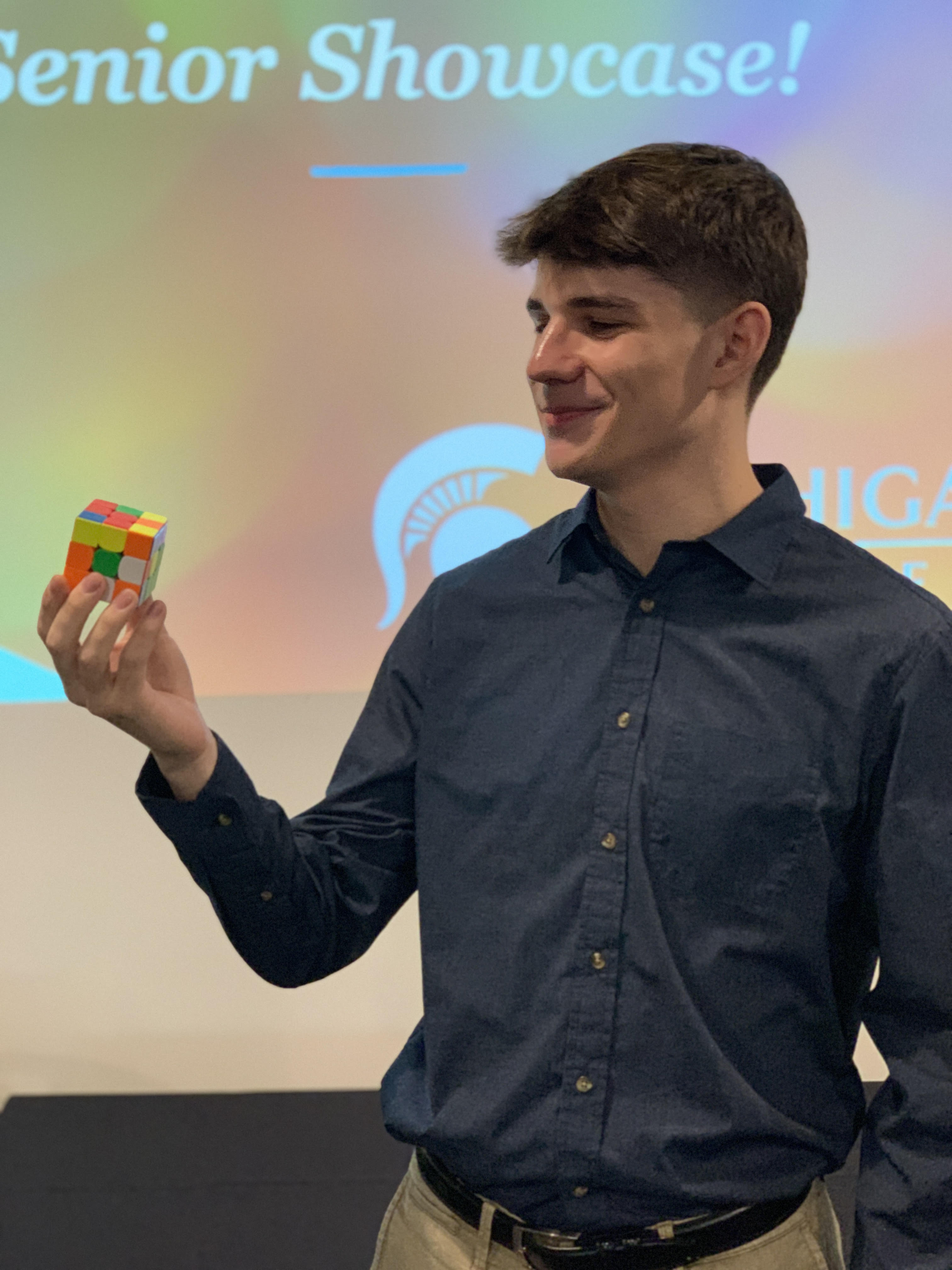
In my free time, I really enjoy solving Rubik's Cubes. Since 2015, I have been attending official competitions all over the world. I recently attended my 100th competition and do not plan to stop soon! These competitions are officiated by the World Cube Association, a global non-profit organization. Within the WCA, there are numerous solving challenges that are held at these competitions. This can range from the traditional 3x3 speed solve, one-handed solving, and even blindfolded solving. Although I have tried my hand at all the events offered by the WCA, I have dedicated most of my time and focus to master the Fewest Moves Challenge (FMC).
FMC is unlike the other speed-solving events recognized by the WCA. Each competitor is given the same scramble and one hour to try and find the shortest solution possible to that scramble. The competitor is allowed to scramble and resolve the cube as many times as they'd like within the hour. The competitor then must write down their solution on an official paper and submit their final solution to the WCA officials. I have been practicing FMC since 2018. After many years of research, practice, and competing in FMC, I have achieved a top 10 world/top 5 in North America ranking for both a mean of 3 solves and a single solve, and Michigan State record for mean of 3 solves. I was also able to win CubingUSA Nationals 2023 in FMC, making me the 2023 US National Champion!
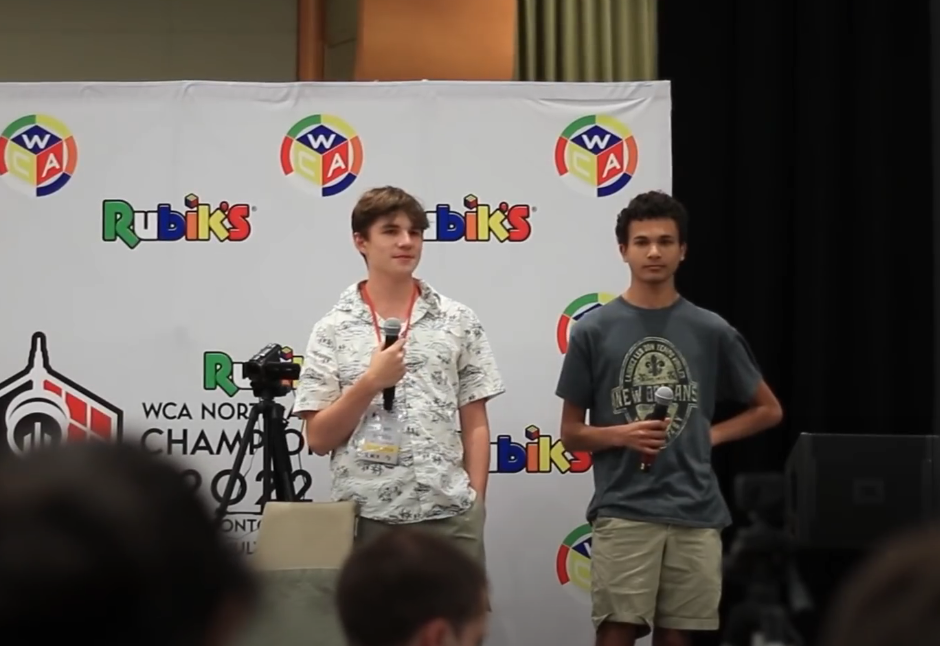
Additionally, in the Summer of 2022, I had the opportunity to give an informational seminar about FMC at the biannual Rubik's North American Championship. With the help of my good friend AJ Kamal, we broke down the different strategies and techniques of FMC. It was such a great experience being able to give this presentation and shed some light on the techniques required to become an FMC solver! You can check out the recording of the seminar here.

In Fewest Moves solving, analyzing how we achieve efficient solutions to the Rubik's cube requires a streamlined and effective process. Many developers amongst the cubing community are constantly working new ways to achieve this. I always have wanted to apply my developmental skills to help aid the Fewest Moves Community, which inspired me to create QT-Counter.
QT-Counter is a short C++ script that is meant to take large Domino Reduction solutions and sort them based on the number of quarter turns required to solve the Domino Reduction. This is particularly useful in researching the frequency of quarter turn amounts of certain Half Turn Reduction subsets and how to approach solving them.
If you are an FMC solver or just curious, check out QT-Counter on my GitHub here!