With the scope of our site being quite large, performing an audit on every single page would be unrealistic in a manageable time frame. However, pages are built with templates that are present for all sites within our scope, so being able to find accessibility issues within the site wide templates allowed for us to make site wide remediation. I performed an audit for pages for MSU's Theatre Department that received the most user traffic and pages that may be difficult to navigate through. The pages I researched were:
2022 - 2023 Season (now archived)
The severity severity standards were based off of Michigan State University's Accessibility Severity Scale. The scale is as follows:
Level 4, Blocker: Prevents access to core processes or many secondary processes; causes harm or significant discomfort.
Level 3, Critical: Prevents access to some secondary processes; makes it difficult to access core processes or many secondary processes.
Level 2, Major: Makes it inconvenient to access core processes or many secondary processes.
Level 1, Minor: Makes it inconvenient to access isolated processes.
Level 0, Lesser: Usability observation.
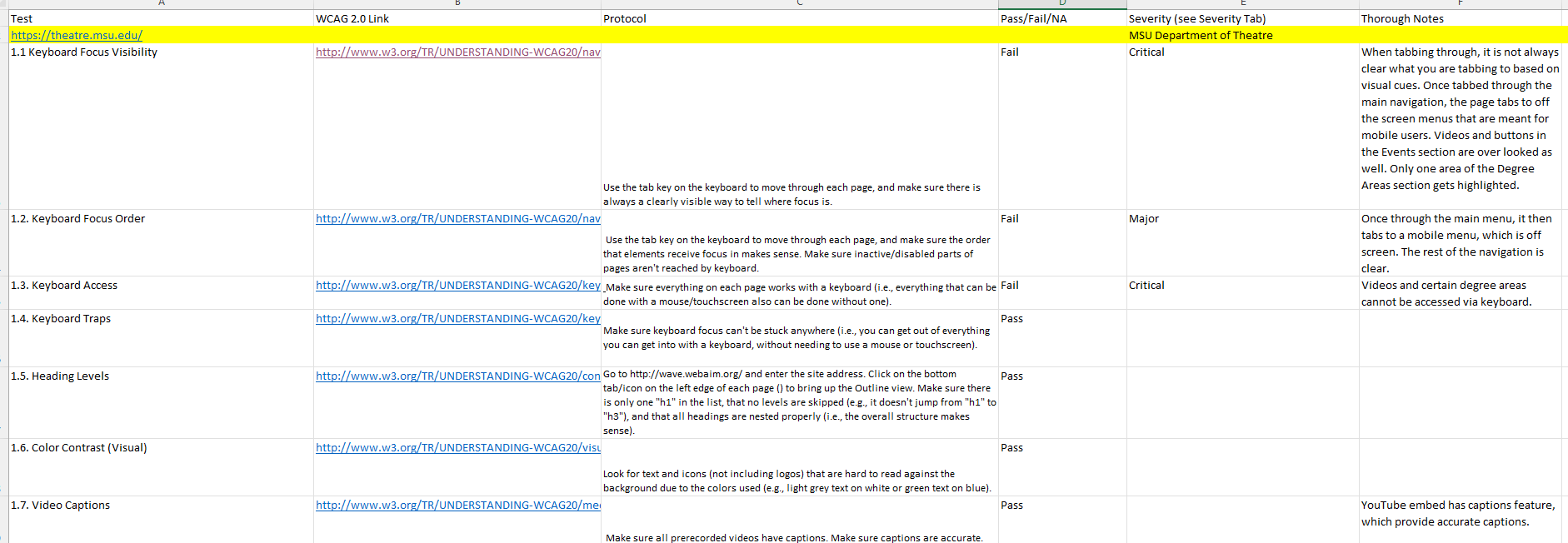
I was tasked with developing a workflow and process for auditing these sites within the given timeframe. Ultimately, I opted for recording and comparing data within an excel spreadsheet. Each page had its own respective section within the document where the page was tested against each WCAG 2.0 Level AA Guidelines. Each guideline would be recorded as passed/failed, what severity of failure, and thorough notes describing the issue. This process was based off of the workflow established the initial audit done by MSU Civil Rights Department.
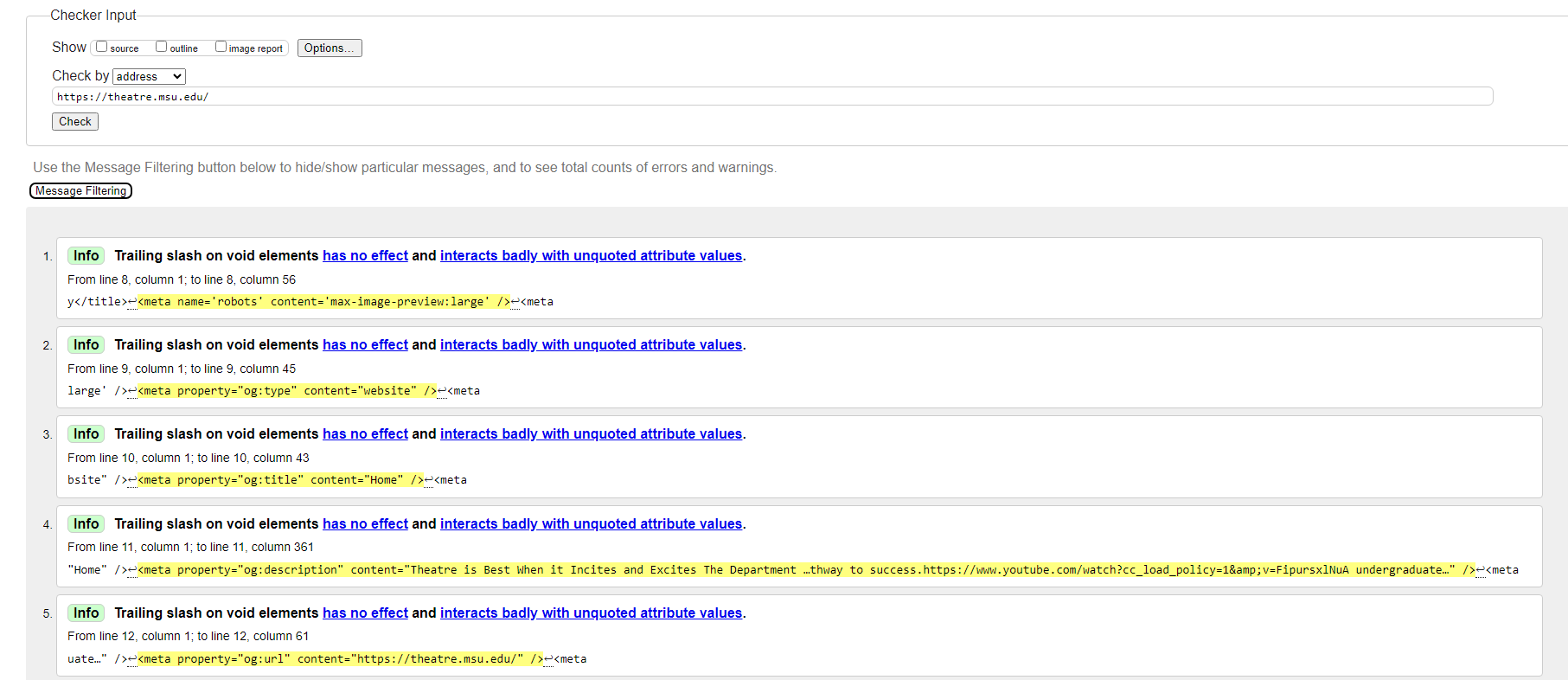
This audit revealed multiple issues within the global site network templates as well as the individual sites. The severity of each problem varied quite a bit, as well as the ability to fix these issues. Many of these issues could be resolved very quickly, while others opened the door to more broad and complicated projects. For example - WCAG Guideline 4.1.1 regarding parsing requires that all HTML and CSS code is valid. When running our site's code through a code validator, many errors in both the HTML and CSS code were present, which is a much deeper underlying issue with our system that cannot be easily remediated.
However, the most issues came from the templated header that was present amongst all sites in our ecosystem. When testing WCAG Guideline 2.4.7, I discovered that the focus of the keyboard tabbing was very unclear and difficult to follow. I was then able to diagnose this as an issue with our responsive web design. The keyboard was allowed to tab into the mobile menu, even when the mobile menu was not being displayed. This impacted not only the keyboard navigation, but the effectiveness of the screen reader, which would read the items within the mobile menu as well. This was a critical issue that could cause confusion and frustration for many users. Fixing this issue would also resolve the issue across our entire ecosystem, which we were super excited about.
Accessibility is extremely important to me as a designer and as a human being. Ensuring my designs, products, and anything I create is available to anyone who wants to view an integral part of who I am. I have always loved to create and share my creations with the world. When I began studying User Experience Design, I became aware of how inaccessible the majority of things in our digital and physical world are for so many people. Being able to play a part in creating a more accessible world for as many people as possible is something I am honored to do and am very excited about! Being able to work and make significant changes to a website that many users interact with on a daily basis was such a valuable experience and I look forward to doing similar work with other applications and interfaces I create and work on!